Three new AI models now available in ai.to.design
-

- Name
- Ardena
- @ardena_gonzalez
This week, three frontier models join ai.to.design: Claude Opus 4.8 from Anthropic (released May 28, 2026), MiniMax M3 from MiniMax (released June 1, 2026), and Qwen 3.7 Max from Alibaba (released May 20, 2026). Each one replaces or upgrades a predecessor already available in the plugin.
Here’s the breakdown of what’s new, and how each new model held up against its predecessor when testing with the following prompt:
Design the homepage of a premium project management tool for creative agencies. Include: a hero section with a headline, subheadline, and two CTAs (free trial + book demo); a “how it works” section with three steps; a features grid with six items (icons + short descriptions); a social proof strip with logos from five recognizable brand clients; a pricing section with three tiers (Starter, Studio, Agency) including a highlighted recommended plan; and a footer with navigation links and a newsletter signup. Use a dark theme with a bold typographic style. The layout should feel editorial and intentional — not generic SaaS. All text should be realistic placeholder copy relevant to a creative agency context.
Claude Opus 4.8
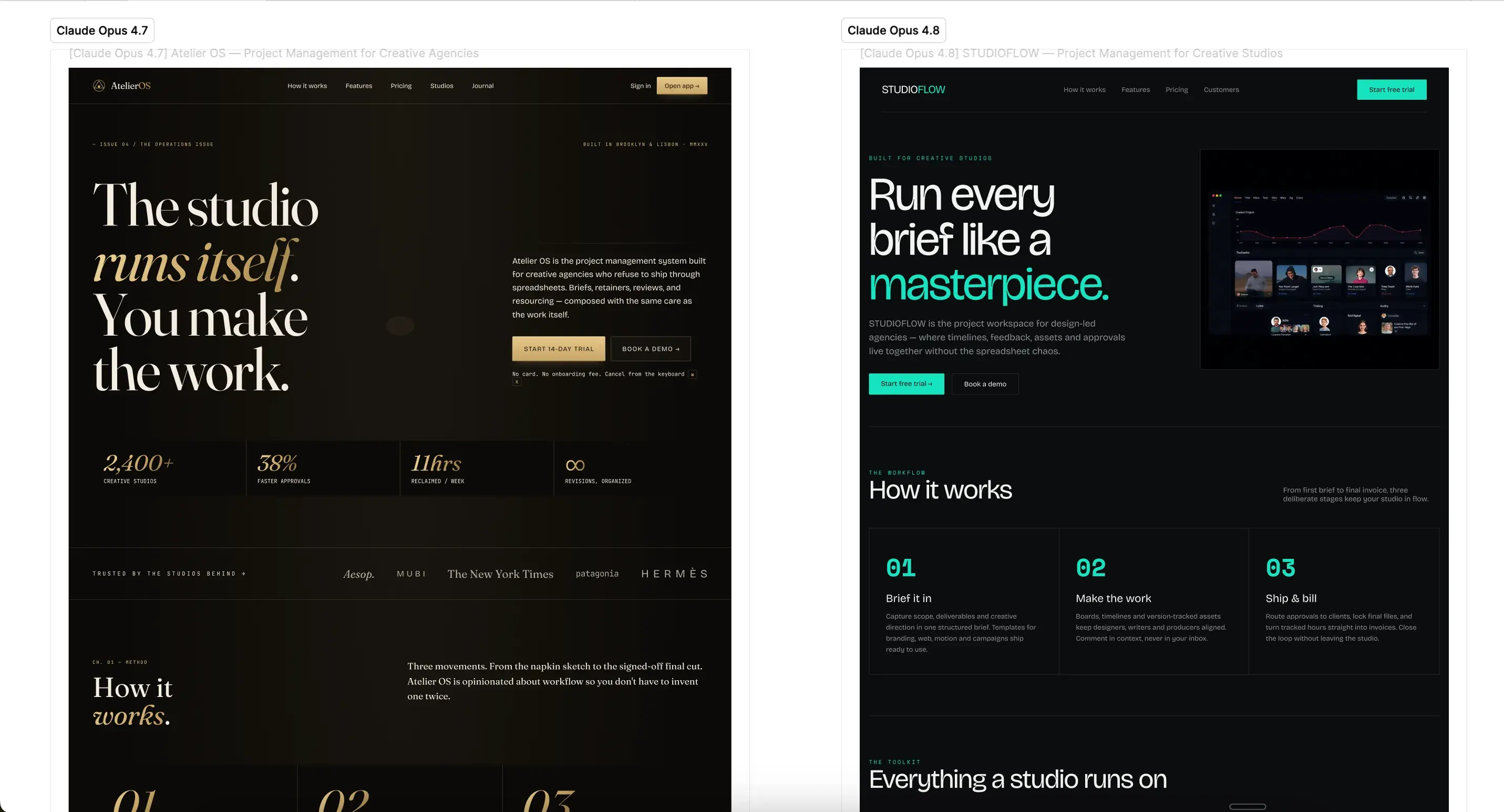
Claude Opus 4.8 replaces Claude Opus 4.7 with improved handling of an underspecified prompt: rather than filling gaps silently, it flags what’s missing. This means fewer layouts that look confident but miss your intent.
After testing it ourselves, Opus 4.8 stayed perfectly on-brief, adding an image of the product as specified, where Opus 4.7 didn’t. It also made much better use of space and layout, creating a landing design that was cleaner and needed much less scroll that it’s predecessor.
MiniMax M3
MiniMax M3 is the biggest architectural shift of the three new models recently added to ai.to.design. For design generation, the most direct signal is SVG-Bench: M3 surpasses Claude Opus 4.7 on SVG generation quality. That carries over to any structured visual output where layer logic and precise geometry matter.
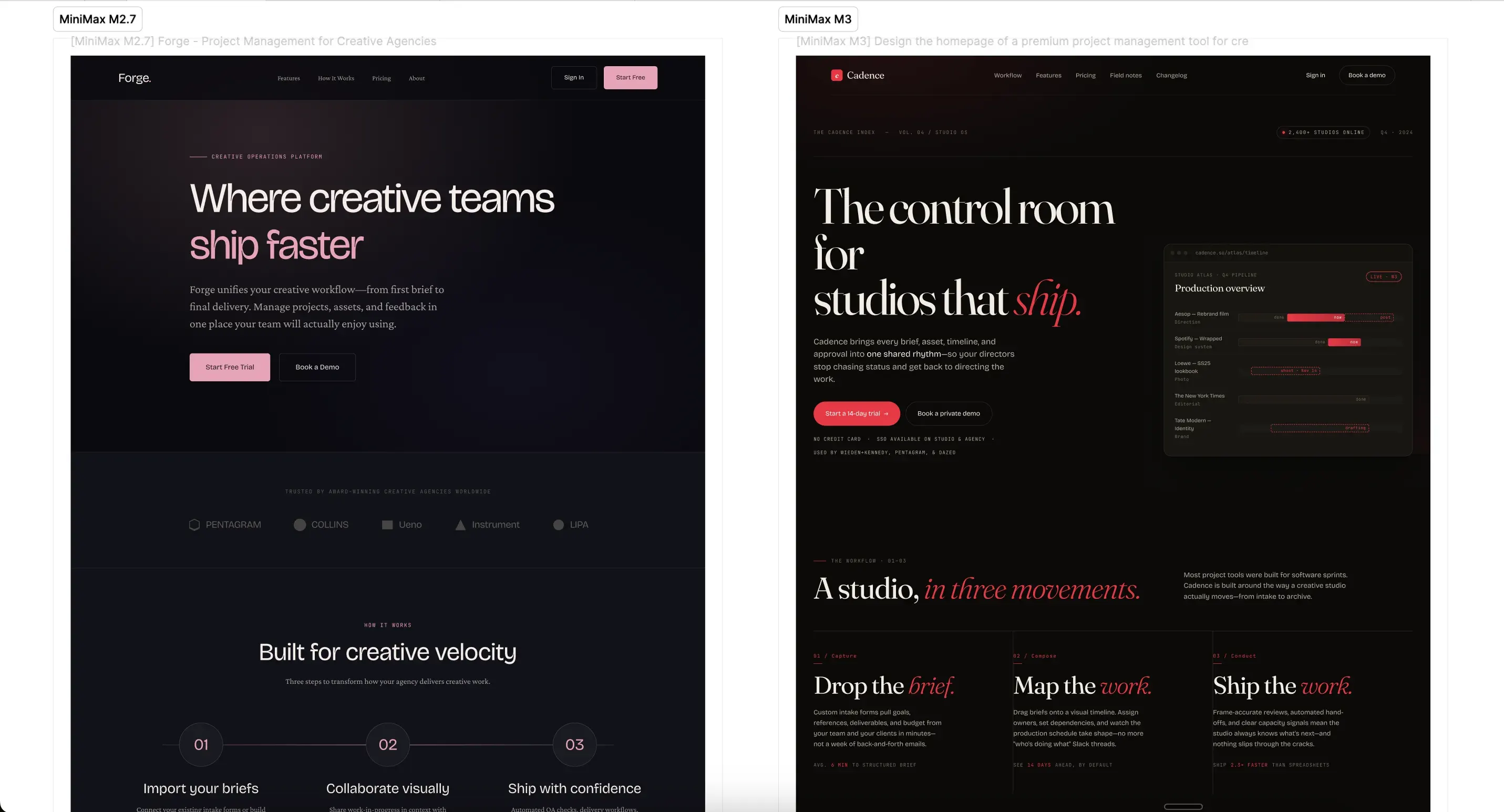
When putting it to the test against MiniMax M2.7, M3 actually included an image of the product specified in our original prompt, where M2.7 ignored it completely. The design also seems more elevated and adequate for a boutique studio design.
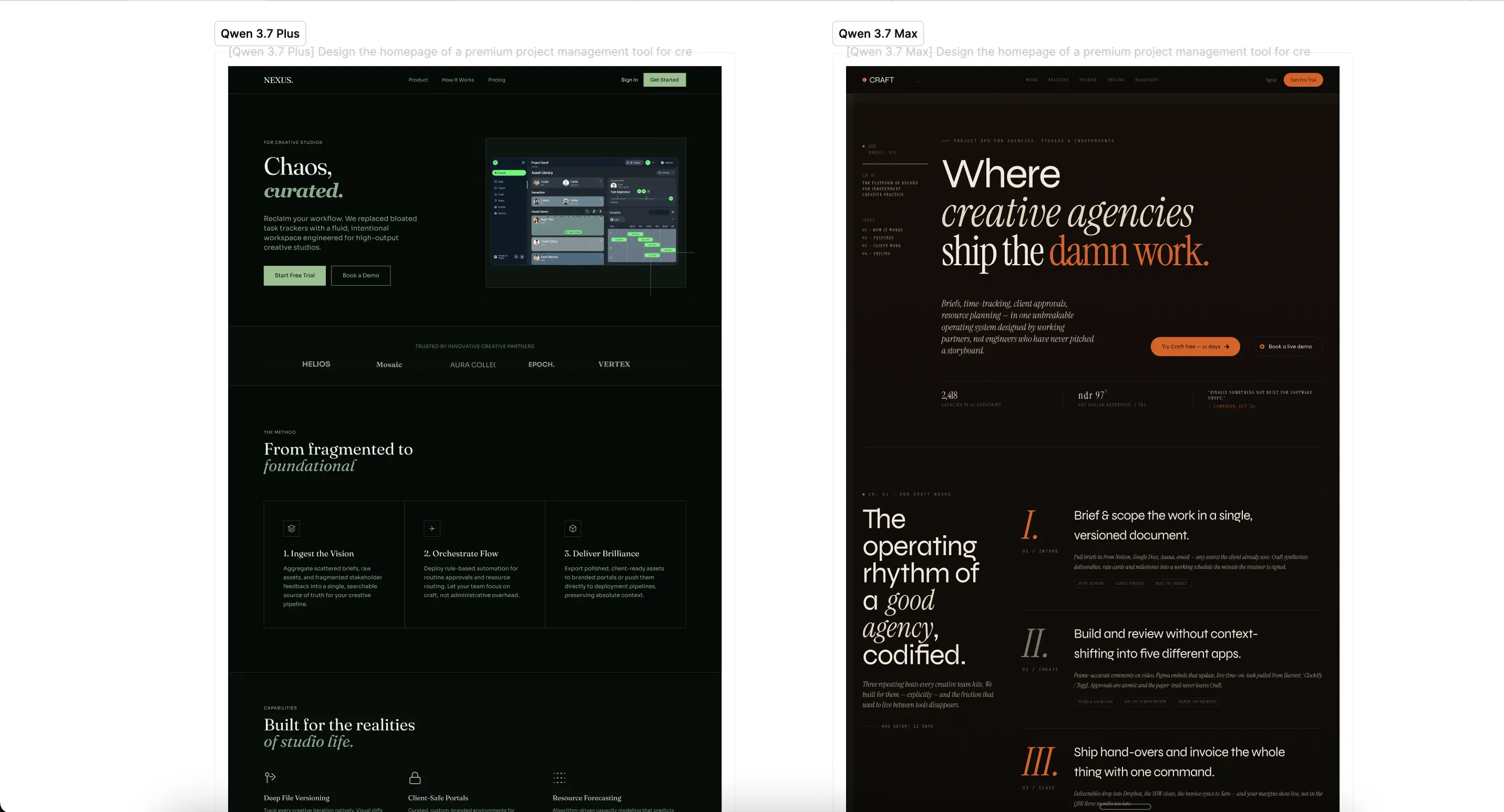
Qwen 3.7 Max
Qwen 3.7 Max is built around one thing: following detailed specifications without losing track. The same structured comprehension applies when you give it a detailed page brief: component list, visual hierarchy, spacing rules, copy tone.
Qwen 3.7 Max adds the ability to sustain precision across a much longer reasoning chain, which translates directly to layouts that follow a thorough prompt all the way through.
We decided to compare it against Qwen 3.7 Plus. While it didn’t deliver on adding images as requested (Qwen 3.7 Plus did), the design of the page was, overall, much more visual and bold in both design and copy, and probably the most unique of all the designs produced in these multi-model tests!
Give them a try!
Try the 3 latest models for yourself in ai.to.design and generate the designs you need with a simple prompt.
Stay tuned! Any new, upcoming models will surely be available in ai.to.design first.